
Ridely App - B2C company
Year:
2023
Role:
Product designer
Team:
Tatiana H - UX/UI, I Zangers - Product Manager, B. Gielbaga - Frontend dev
▪︎ About the company
Ridely is a digital companion for equestrians, offering tools to track training, set goals, and receive guidance from top professionals. Designed for riders of all levels, the app provides structured training programs, video tutorials, and progress tracking to support continuous improvement.
Ridely operates on a freemium model, giving users access to basic features for free while offering premium subscriptions for advanced training content, personalised coaching, and exclusive insights from elite riders. Additionally, the platform collaborates with equestrian brands for strategic partnerships and in-app promotions, creating a revenue stream beyond subscriptions. By blending technology with expert knowledge, Ridely transforms how riders train, learn, and connect with the equestrian community.

▪︎ About the project
Overview
The Community section in Ridely was redesigned to address usability gaps and strengthen user participation. While the original layout allowed riders to join groups, it lacked clarity, discoverability, and ongoing engagement mechanisms. The goal was to create a space that not only connects riders but also encourages continuous interaction, exploration, and a stronger sense of belonging.
The challenge
The previous community experience suffered from three main UX issues:
1) Low discoverability: users couldn’t easily explore or understand the value of different groups.
2) Commitment without context: users had to join groups without knowing what to expect.
3) Fragmented engagement: there was no centralised place to follow updates from multiple groups.
These issues led to:
Low participation
Confusion about group value
Missed opportunities for users to feel connected and motivated to engage
The challenge was to make exploration effortless and participation feel rewarding.
▪︎ Key improvements
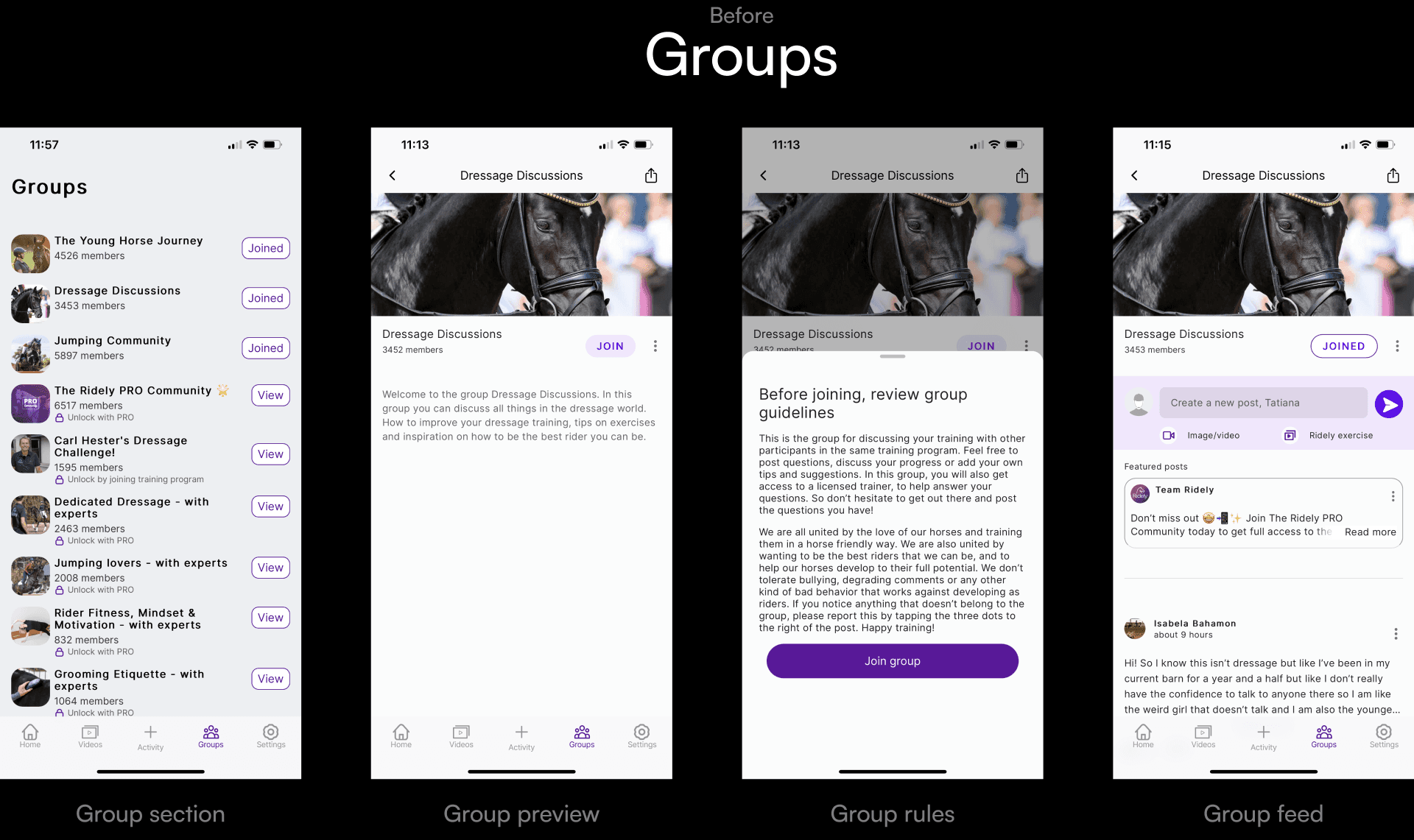
1. Personalised group feed (engagement gateway)
Before: no way to see group updates in one place.
After: a feed that consolidates updates from all joined groups with an easy toggle between:
Group Feed: personal updates from subscribed communities
Group Discovery: suggestions based on interests.
Creating a single source of updates lowers effort and drives habitual return behavior. Users no longer need to switch sections or guess what’s new, they see activity that’s relevant to them.
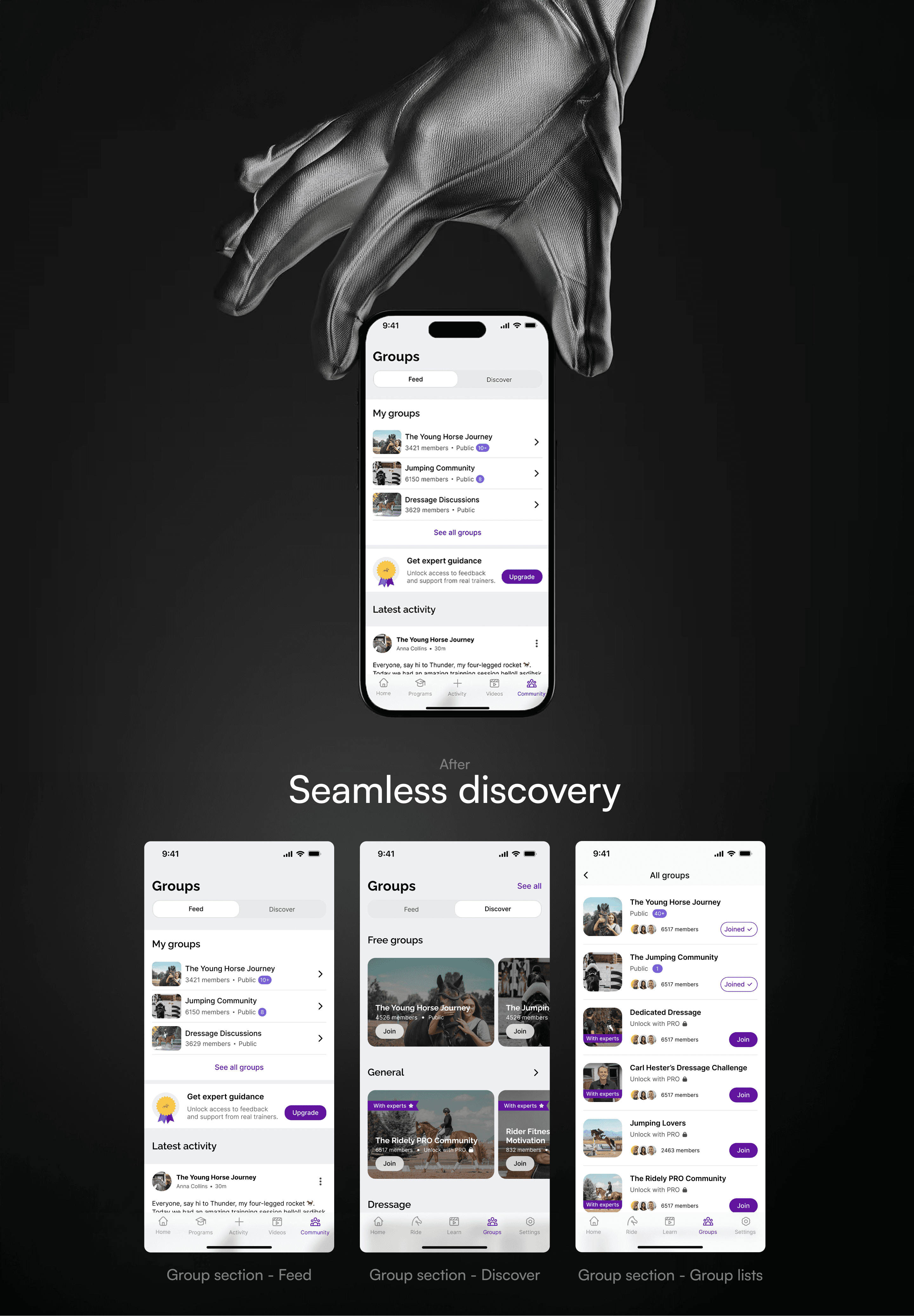
2. Visual discovery and interaction
Before: groups were listed without context or visual cues.
After: eye-catching displays with stickers highlighting expert-led groups, enabling easier exploration.
Introducing strategic visual hierarchy helps users quickly assess what matters, whether that’s expert guidance or high activity. This supports scanning behaviours common in mobile interactions.
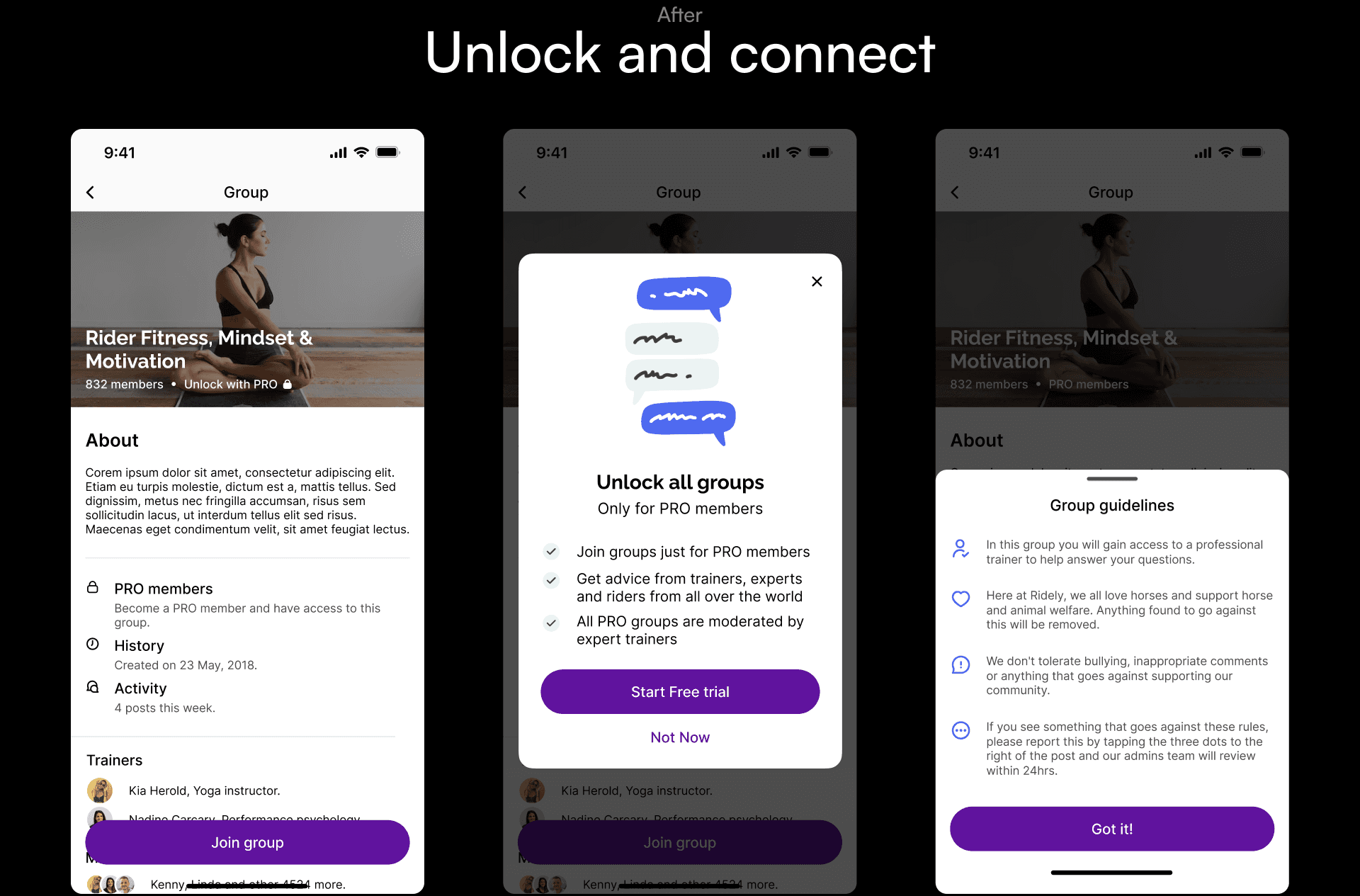
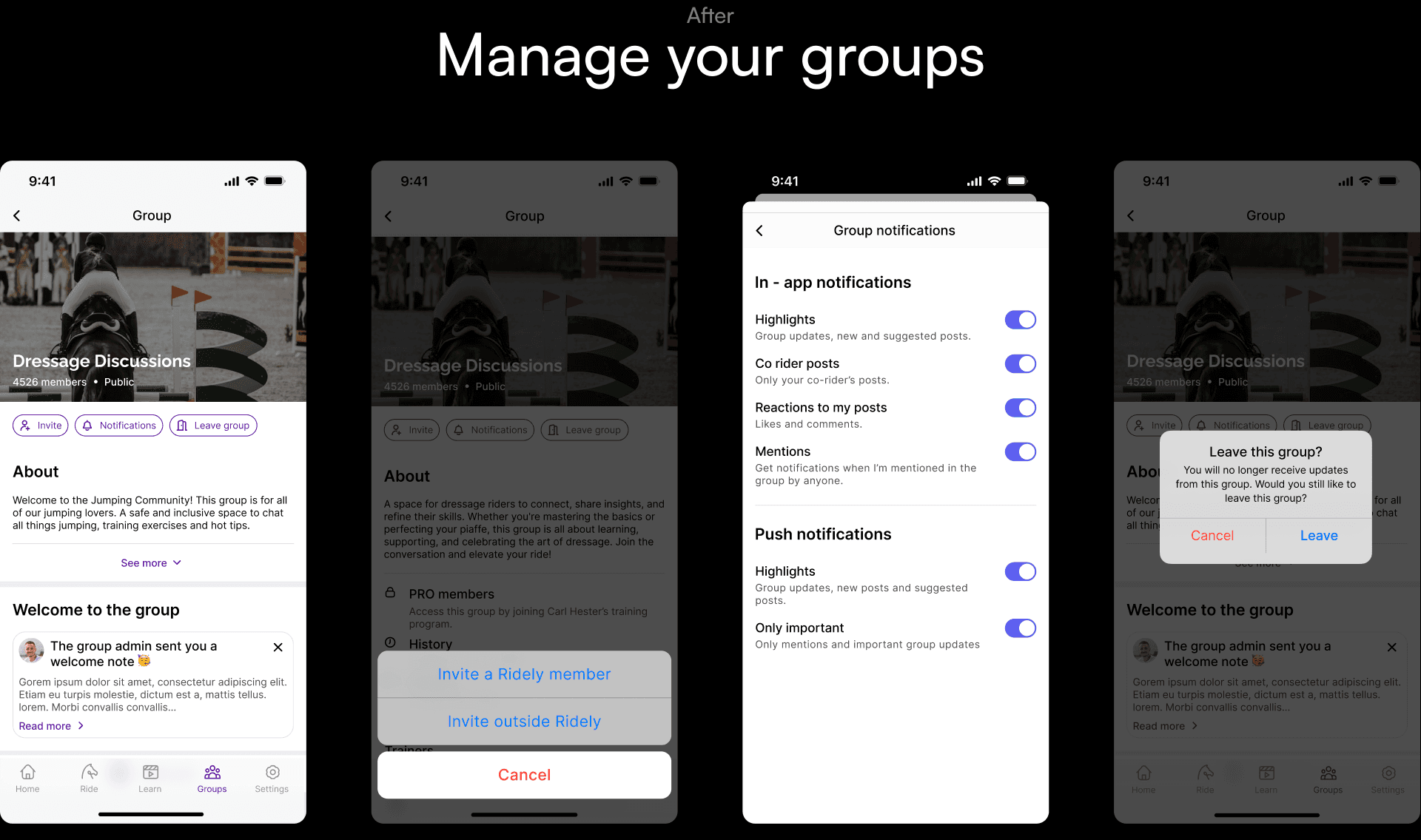
3. Group preview before commitment
Before: Users joined groups blindly.
After: A rich preview shows:
Group type (public, private, expert-led)
Activity level
Creation date
Trainer profiles
Reducing uncertainty before joining supports informed decisions. When users understand what they’re entering, they feel more confident participating, and participation sustains engagement.
4. Contextual conversion tactics
Before: PRO features existed but were not leveraged in the community context.
After: Free users trying to join PRO-exclusive groups receive a contextual prompt that:
Explains exclusive value
Highlights expert access
Shows what they’d unlock by upgrading
This isn’t a generic upsell; it’s value-aligned persuasion. When conversion is tied to an experience users are already trying to access, choice feels natural rather than intrusive.
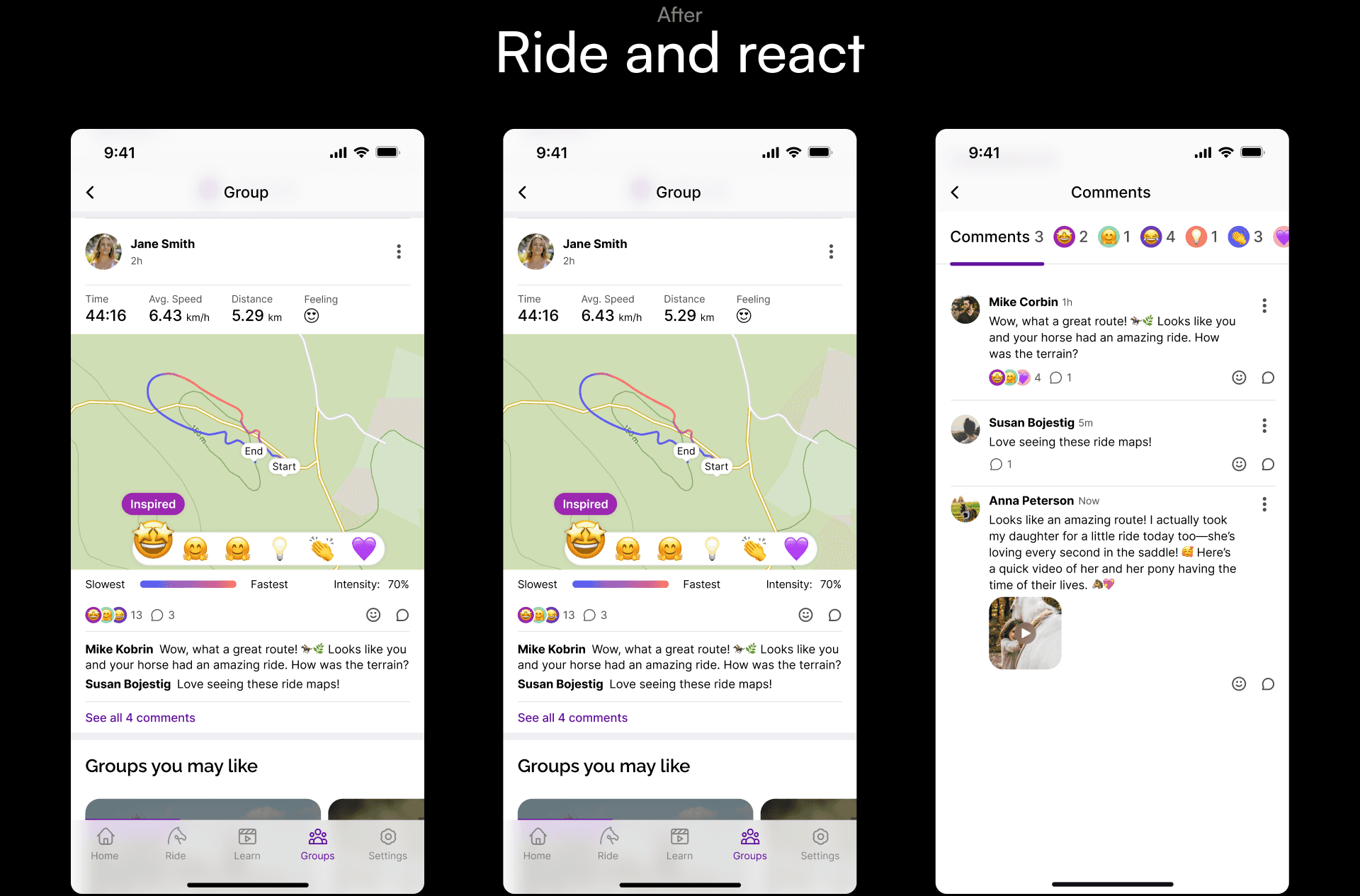
5. Enhanced engagement interactions
Before: there was no lightweight interaction mechanism within groups.
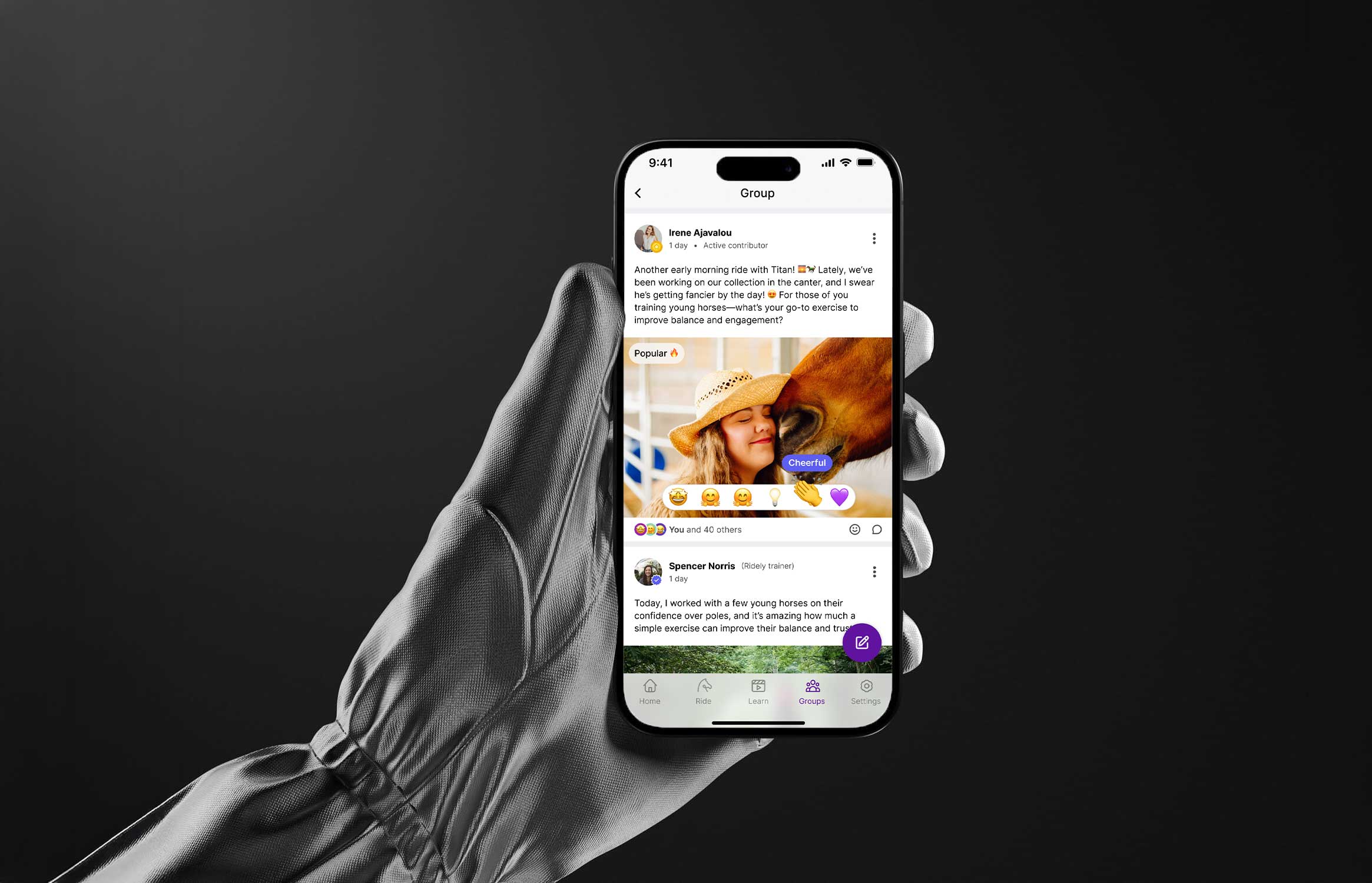
After: we introduced a set of contextual reactions aligned with the community tone and riding culture.
Not every user wants to write. But many users want to acknowledge.
By introducing reactions:
We lowered the barrier to participation.
Enabled micro-engagement behaviors.
Encouraged silent users to become visible contributors.
Increased the feeling of activity within groups.
▪︎ Wrap up
This redesign:
Improved discoverability: users can explore communities with context and confidence.
Increased participation: group previews and centralised feeds lower barriers to entry and habit formation.
Boosted PRO relevance: context-sensitive conversion paths align product value with user intent.
Strengthened community atmosphere: reactions and expert highlights elevate trust and belonging.
This project reinforced a few core UX principles:
Design decisions should reduce uncertainty: users need clarity before commitment.
Information hierarchy drives exploration: visually distinct cues help users scan and decide quickly.
Contextual conversion supports trust: when premium experiences are introduced where users already seek value, they feel more natural.
If we had more resources, I would have explored:
User journey mapping based on engagement cohorts
A/B testing on group preview formats to optimise join rates
The redesigned Community section now feels like a living social space, one that riders actively explore, participate in, and return to.